





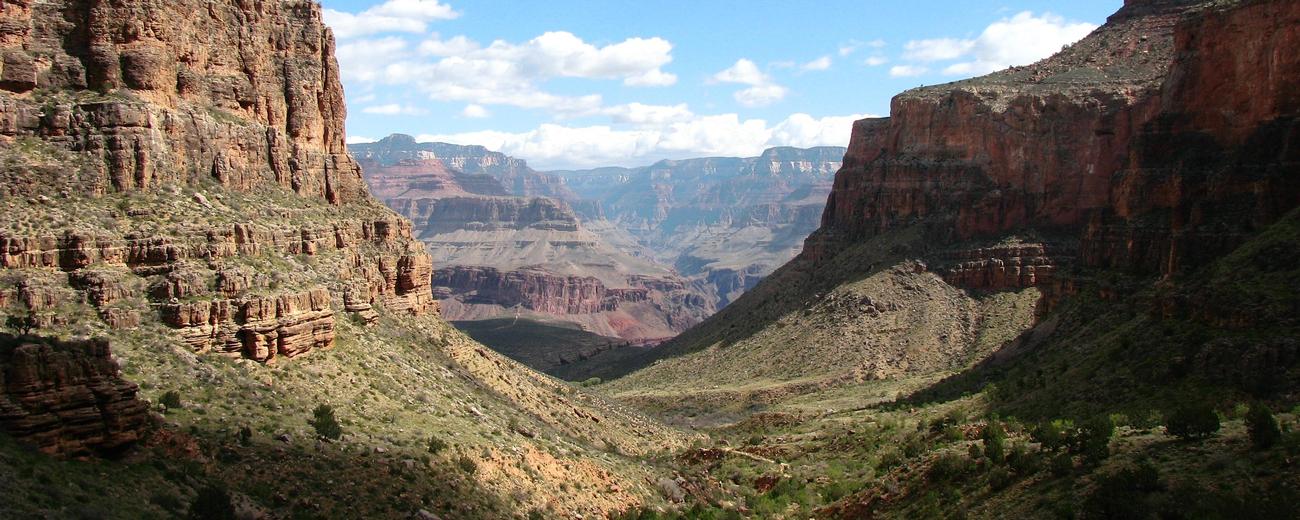




















The Grand Canyon is an awesome place. Its overwhelming size and its intricate and colorful landscape make it without question one of the seven marvels of the natural world.
While it is not the deepest canyon in the world, it is unmatched throughout the world for the vistas it offers to visitors. Geologically it is hugely significant because of the thick sequence of ancient rocks that are beautifully preserved and exposed in the walls of the canyon. These rock layers record much of the early geologic history of the North American continent.
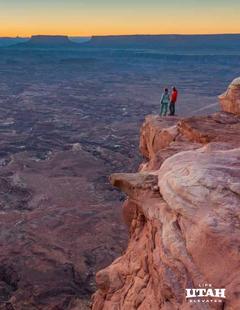
Most of the 5 million annual visitors to the Grand Canyon arrive at the South Rim and experience its beauty from the many overlooks along the canyon edge. There are many miles of paved and unpaved walkways along the rim. The North Rim of the Grand Canyon shares similar outstanding views from a vantage point 1000 feet higher than on the South Rim. Here too are walkways and overlooks that let you take in the grandeur of the canyon. Because the North Rim is less easily accessed, visitation is far lighter than on the South Rim.
For the truly adventurous, the inner canyon awaits. Strong hikers can climb down to the Colorado River via the Bright Angel Trail or South Kaibab Trail. For a less exhausting experience, mule pack trips use the same trails to take their riders down and up canyon.
Possibly the best way to experience the canyon is on a Grand Canyon Rafting Trip down the roaring Colorado River.
To learn more about your options at the Grand Canyon , select one of the topics to the left. A more detailed orientation to the park can be found by selecting Park Orientation.
The Grand Canyon is located in Northern Arizona. The South Rim is about 80 miles north of Flagstaff. The North Rim is most easily accessed from southern Utah or the Lake Powell area.
Entrance Fees
Grand Canyon National Park Vehicle Permit - $35.00
Grand Canyon National Park Motorcycle Permit - $30.00
Grand Canyon National Park Individual Permit - $20.00/person
The individual permit is only if you are entering by foot, bicycle, park shuttle bus, Grand Canyon Railway and private rafting trip.
Admission to Grand Canyon National Park is for seven days and includes both the North Rim and South Rim.
Exceptions
- Anyone who is 15 or younger is exempt from paying an entrance fee.
- Passes may be used for entry as defined on the back of the pass.
- In many cases the driver will have been hired for transportation only and is exempt from paying the entrance fee.
- The total fee charged will not exceed the equivalent commercial fee for that type vehicle.

.png)